Another Day of (Artificial) Sun: China Unveils Fusion Energy Project
China has unveiled its latest fusion energy initiative, signaling a new phase in the country’s efforts to harness fusion power and advance its broader transition to clean energy.
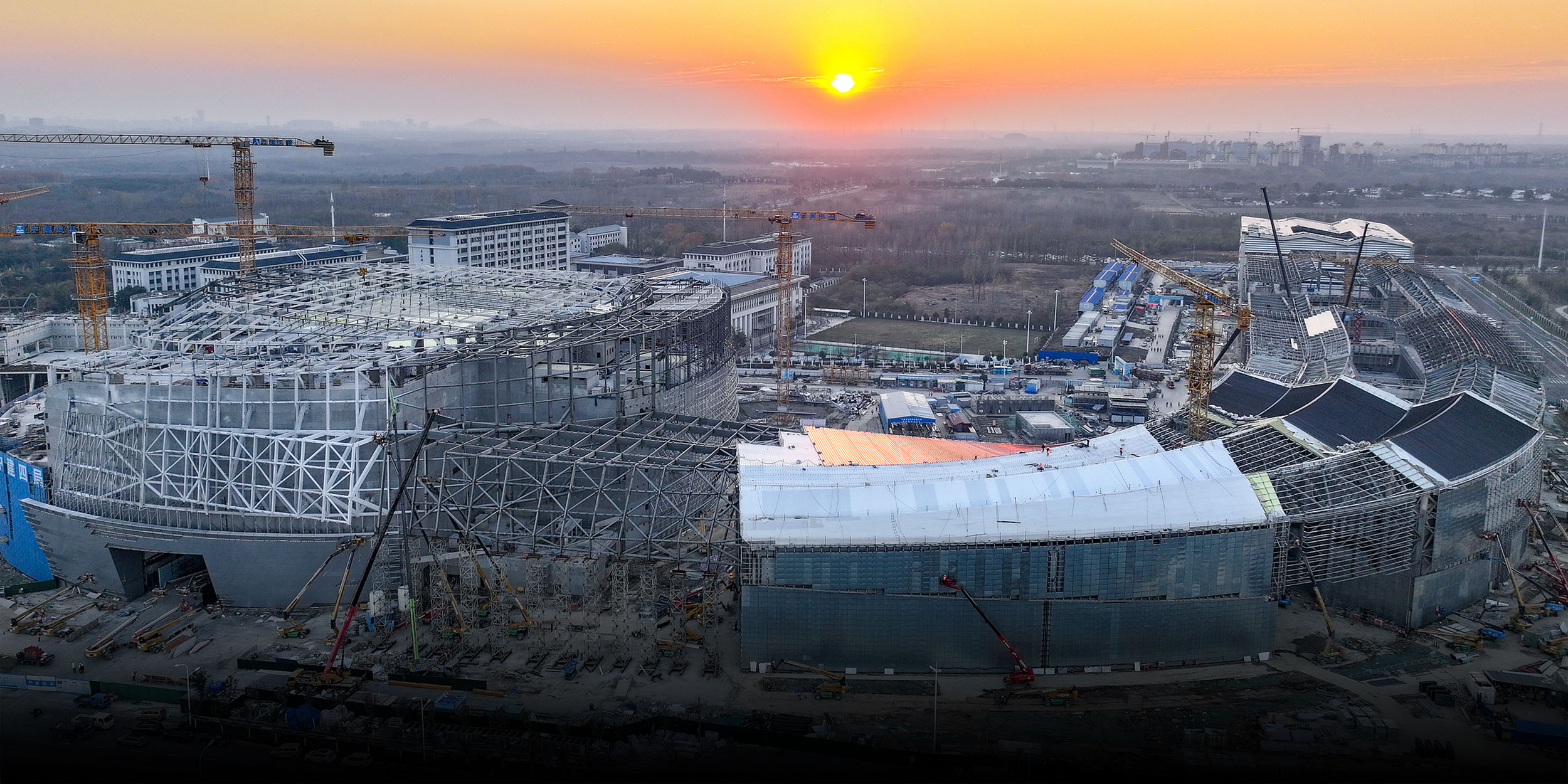
The Chinese Academy of Sciences (CAS) officially announced its Burning Plasma Experimental Superconducting Tokamak (BEST) program on Monday in Hefei, capital of eastern China’s Anhui province. Tokamaks — also dubbed “artificial suns” for how they replicate the reaction that powers the sun — are doughnut-shaped devices used to produce fusion reactions.
The project is scheduled for completion by the end of 2027.
Fusion energy has long been hailed as humanity’s “ultimate energy source” owing to its potential to create limitless clean energy. However, fusion energy is still far from being a practical energy source, as reactors tend to consume more energy than they produce.
While nuclear power makes up only a small share of China’s domestically produced energy — around 5% of the total in 2024 — it remains a crucial part of the country’s low-carbon strategy.
Once construction of BEST is complete, the facility will conduct experiments involving the burning of plasma made from deuterium and tritium — two isotopes, or different forms, of hydrogen. If the project can produce more energy than it consumes, it may demonstrate the feasibility of generating electricity from fusion.
In an interview with state news agency Xinhua, Song Yuntao, deputy director of the Hefei Institutes of Physical Science under CAS, called the project “an exploration into uncharted territory.”
BEST seeks to achieve a burning plasma — where the fusion reaction sustains itself through the heat it generates — which is a central milestone on the path to continuous power generation through fusion, Song explained.
To promote cooperation among Chinese and global fusion energy experts, the launch event on Monday also invited fusion scientists from more than 10 countries, including France, the UK, and Germany, who signed the Hefei Fusion Declaration, an agreement to advance open science in the field of fusion energy.
Under the program, several major fusion research platforms under CAS — including BEST — will be accessible to the global scientific community, with open research funds established to support international collaboration and expert exchanges.
BEST represents China’s next-stage push in its long-term nuclear energy research. The country maintains several other fusion energy reactors, including the Experimental Advanced Superconducting Tokamak (EAST), also in Hefei, which has been in operation since 2006.
EAST acts as a test site of the International Thermonuclear Experimental Reactor, or ITER — a fusion energy collaboration between China, the European Union, India, Japan, South Korea, Russia, and the United States — and has achieved several notable milestones, including sustaining high-temperature plasma for more than 1,000 seconds this year.
China has since 2018 stepped up its investment in large-scale science projects across fields ranging from space exploration and particle physics to clean energy and quantum technology. Related projects include the world’s largest quantum research facility, the China Space Station, and now BEST.
Editor: Marianne Gunnarsson.
(Header image: An aerial view of the Burning Plasma Experimental Superconducting Tokamak under construction (BEST) in Hefei, Anhui province, Nov. 22, 2025. VCG)